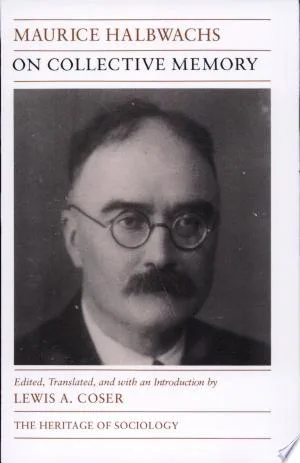
In this collection of essays, Maurice Halbwachs argues that human memory is a social process rather than a purely individual psychological function. He asserts that people define and recall their pasts through "social frameworks," such as family units, religious organizations, and social classes. These groups provide the structured reference points and language necessary to organize mental images of the past. Halbwachs demonstrates how communities reconstruct their history to align with present-day values and needs, essentially treating memory as a tool for group cohesion. By examining how specific groups like the early Christian church localized their sacred histories, he shows that what we remember is dictated by our current social memberships.
This volume serves students and researchers in sociology, psychology, and historiography who study the intersection of individual thought and social structure. Readers gain a functional framework for understanding why different groups interpret the same historical events in conflicting ways. The text provides a technical vocabulary for analyzing how traditions are maintained and how institutions use collective narratives to reinforce identity. Users of this book walk away with a methodology for seeing personal recollection as a reflection of group belonging.
Deep and open-ended; a demanding read.
Best for readers like The Deep Diver. Which reader are you?
- Published
- 1992
- Publisher
- University of Chicago Press
- ISBN
- 9780226115962
- Language
- EN