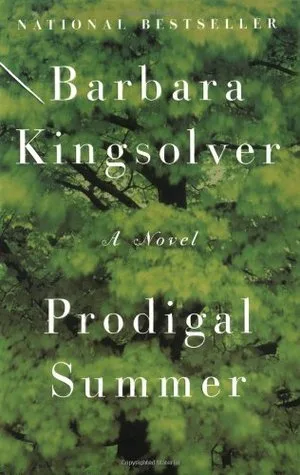
In the humid mountains of southern Appalachia, three narrative threads intersect through the lens of evolutionary biology and ecological interdependence. Deanna Wolfe, a reclusive forest ranger, monitors the return of a breeding pair of coyotes while debating the ethics of predator control with a young hunter. Nearby, Lusa Landowski, an entomologist, navigates the death of her husband by applying her knowledge of insect pheromones and moth behavior to resuscitate a failing farm. Simultaneously, two elderly neighbors, one an organic orchardist and the other a defender of chemical pesticides, argue over the chemical composition of the regional ecosystem. These stories document the mechanics of forest succession, the reproductive cycles of predators, and the genetic necessity of biological diversity.
Readers interested in the intersection of literature and environmental science will find a detailed study of the niche occupancy and trophic cascades that govern wild spaces. The book attracts those seeking a narrative grounded in the realities of sustainable agriculture and the North American landscape. One walks away with a technical understanding of how human interference reshapes natural selection and how individual species, from chestnut trees to apex predators, function as vital cogs in a larger biological machine.
Thought-provoking; a moderate read.
Best for readers like The Story Seeker. Which reader are you?
- Published
- 2000
- Language
- EN