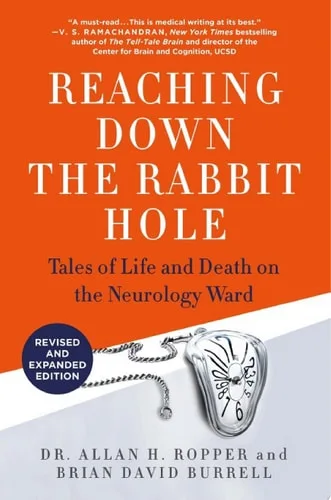
Dr. Allan Ropper provides a firsthand account of life within the neurology ward at Brigham and Women’s Hospital. He describes the diagnostic process for conditions where the brain’s hardware fails, leading to symptoms like sudden memory loss, motor dysfunction, and personality shifts. The narrative details clinical encounters with patients suffering from neurosyphilis, Lou Gehrig's disease, and rare forms of stroke. Ropper emphasizes the importance of the bedside physical exam over modern imaging, explaining how a doctor’s observations of a patient’s gait or eye movements reveal localized brain lesions.
Medical students and readers interested in clinical biology read this book to understand the intersection of physical anatomy and human consciousness. It serves as a study of medical deduction, showing how physicians differentiate between organic neurological damage and psychological disorders. The reader gains a realistic perspective on the limitations of modern medicine and the specific logic required to map the brain's malfunctions. The text provides a clear look at how neurological diagnoses are reaching beyond the data provided by electronic scans.
Insights from Reaching Down the Rabbit Hole
“In neurology, the history is everything.”
Medicine is mostly about managing uncertainty. Doctors are just guessing with better vocabulary and more expensive tools than we have.
Hysteria is still real even if we call it something else now. Some people literally go blind because their emotions are too heavy to carry.
“The line between life and death is often a gray zone of technology.”
Brain death isn't a single moment. It is a slow fade that leaves families trapped in a terrible limbo.
Being a genius won't save you from your own mind. That brilliant professor losing his ability to speak was the most heartbreaking part.
- Published
- 2014
- Publisher
- Macmillan Trade
- ISBN
- 9781250034991
- Language
- EN