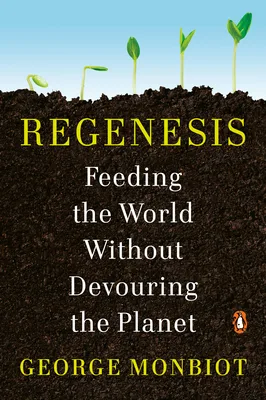
Regenesis: Feeding the World Without Devouring the Planet
George Monbiot argues that current agricultural practices represent the primary driver of ecological collapse. He details how livestock grazing and monoculture farming occupy vast land areas, destroying biodiversity and carbon sinks. The text introduces precision fermentation as a technological bridge to food security, explaining how microbes can produce protein with a fraction of the land and water required by cattle. Monbiot examines soil ecology, describing the complex biological networks of the "rhizosphere" and its role in nutrient cycling. He profiles farmers using perennial grain crops and "stockfree" organic methods to demonstrate that yields can remain high without synthetic fertilizers or extensive chemical inputs.
Environmental scientists and policy analysts read this book to understand the specific land-use requirements of different food systems. Readers interested in the technical intersection of biology and industry will find detailed explanations of cellular agriculture and its potential to replace traditional ranching. The book provides a framework for rewilding vast tracts of land by shifting the human diet toward lab-grown proteins and plant-based systems. Readers walk away with a map of the hidden environmental costs of "natural" farming and a data-driven vision for global food sustainability.
- Published
- 2022
- Language
- EN