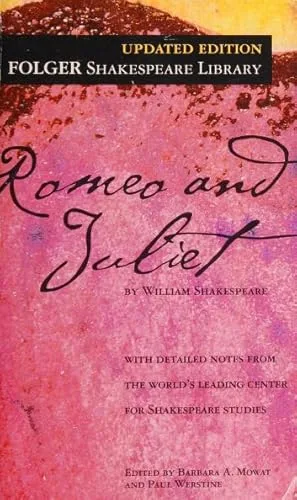
Set in the Italian city of Verona, this dramatic tragedy follows the lethal animosity between two noble houses, the Montagues and the Capulets. When Romeo Montague and Juliet Capulet fall in love at a masked ball, they choose to marry in secret, aided by a sympathetic friar. Their brief union triggers a chain of violent events, including a fatal street duel and a sentence of exile. Through a series of mismanaged messages and impulsive decisions, both protagonists commit suicide in a tomb, ending the blood feud between their grieving parents.
Readers of classic drama and historical fiction turn to this work to observe the intersection of social obligation and private desire. Those interested in the technical aspects of Elizabethan poetry find a dense collection of sonnets and blank verse. The text provides a study of how ancient family grievances can override individual safety and logical choice. Readers walk away with a specific understanding of how timing and chance dictate the outcome of high-stakes human conflict.
Insights from Romeo and Juliet
“A plague o' both your houses!”
Mercutio is the only one who sees the stupidity of the feud. He dies because he tried to help his friend. His final curse on both houses feels like the only honest moment.
“My bounty is as boundless as the sea.”
Juliet is only thirteen years old. She handles more pressure in three days than most adults do in a lifetime. Her courage is terrifying when you realize how young she is.
“Did my heart love till now?”
Rosaline is forgotten the second Romeo sees Juliet. It makes you wonder if he actually loved anyone. He might have just been in love with the feeling of longing.
“Wisely and slow. They stumble that run fast.”
Friar Lawrence thought he could use a secret marriage to fix a political war. He gambled with two lives to satisfy his own ego. Good intentions can be incredibly dangerous.
- Published
- 1590
- Publisher
- Washington Square Press
- ISBN
- 9780743477116
- Language
- EN
Quotes by William Shakespeare
More →There is nothing either good or bad, but thinking makes it so.
Hamlet
What's past is prologue.
The Tempest
The fault, dear Brutus, is not in our stars, but in ourselves.
Julius Caesar