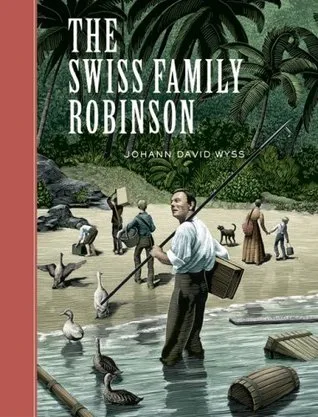
The narrative recounts the experiences of a Swiss pastor, his wife, and their four sons—Fritz, Ernest, Jack, and Franz—after their ship wrecks on a deserted tropical island. The family survives by salvaging tools, livestock, and seeds from the vessel, eventually constructing an elaborate residence in a giant tree. The plot focuses on the practical mechanics of survival and the systematic classification of local flora and fauna. The father uses their daily labor as a medium for moral instruction, teaching the boys botany, engineering, and resourcefulness as they tame their environment through domestic labor.
This text serves individuals interested in the history of didactic literature and the evolution of the survival genre. Modern readers examine it to understand the nineteenth-century European worldview concerning colonial self-sufficiency and the integration of natural science with religious education. The reader acquires detailed, if sometimes imaginative, descriptions of wilderness survival techniques and a clear perspective on the era’s emphasis on discipline, family hierarchy, and the industrious application of human reason to the natural world.
Practical, clear-cut and escapist; a moderate read.
Best for readers like The Escapist Adventurer. Which reader are you?
- Published
- 1828
- Language
- EN