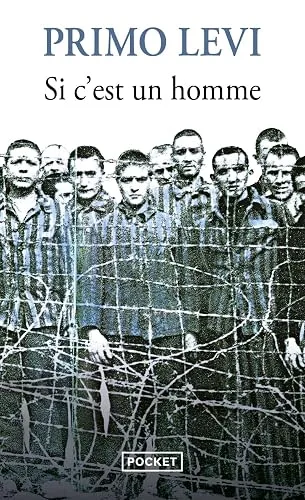
In this memoir, Primo Levi recounts his incarceration at the Monowitz concentration camp within the Auschwitz complex from 1944 to 1945. Levi, a Jewish-Italian chemist, utilizes his scientific training to observe the systematic dismantling of human identity. He details the specific mechanics of the Lager: the hierarchy between prisoners and Kapos, the linguistic corruption of the camp jargon, the physical degradation caused by hunger and freezing temperatures, and the moral vacuum where traditional ethics cease to function. The narrative focuses on the distinction between the "saved" and the "drowned," explaining how survival often depended on luck or the rejection of empathy.
Historians and students of human behavior read this account to understand the logical implementation of genocide. The text serves those interested in the psychological effects of extreme deprivation and the chemical precision of industrial slaughter. Readers gain a technical understanding of how a totalitarian system operates on a cellular level to strip individuals of their names and clothes until only biological functions remain. It provides a dry, clinical record of the conditions that permit a society to treat people as disposable material, leaving the reader with a factual map of the threshold where humanity dissolves.
- Published
- 1947
- Language
- EN