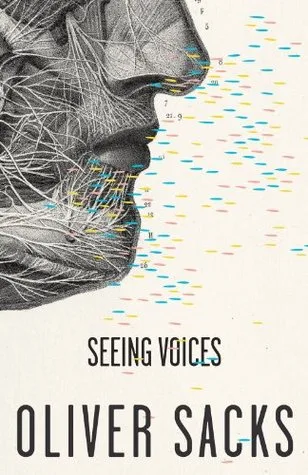
Oliver Sacks moves from the physiology of hearing to the cultural history and linguistic structure of American Sign Language. He examines the 1988 student uprising at Gallaudet University, where activists demanded a deaf president to ensure institutional autonomy. Sacks details how Sign functions as a complete visual syntax processed by the brain’s left hemisphere, much like spoken speech. He argues that congenital deafness is a linguistic condition rather than a medical pathology, emphasizing that early exposure to signing prevents the cognitive delays associated with language deprivation.
This book is for neurologists, linguists, and students of disability studies who want to understand the neurological basis of spatial communication. Readers gain a technical perspective on how the human brain adapts to visual-manual signals. It provides a clear view of the distinction between the oralist method and manualism, showing why Sign is a primary language rather than a set of gestures. Those interested in civil rights history will find a factual account of how a marginalized community used linguistic identity to claim political representation and self-governance.
- Published
- 1989
- Language
- EN