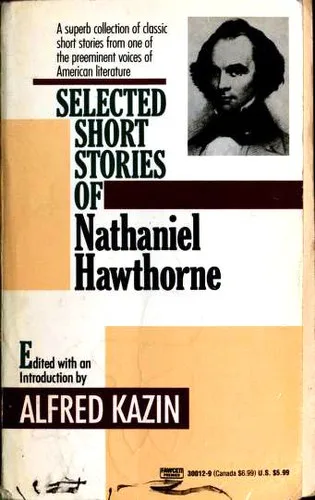
This collection compiles Nathaniel Hawthorne's fiction, centering on the psychological tension within New England’s Puritan history. In stories like Young Goodman Brown and The Minister’s Black Veil, central characters confront the presence of hidden sin and the corruption of human moral nature. The narratives frequently utilize allegories involving forest paths, physical birthmarks, and laboratory experiments to examine the weight of inherited guilt and the consequences of isolation. Hawthorne focuses on the internal struggle between public piety and private depravity, illustrating how social rigidity affects individual identity.
Readers of classic American literature and Gothic fiction turn to these stories to understand the cultural anxieties of the nineteenth century. The volume attracts those interested in the darker aspects of human psychology and the influence of religious dogma on the community. By the end, the reader retains a clear view of how Hawthorne used symbolism to analyze the complexities of conscience and the persistence of ancestral shame. These texts serve as a foundation for understanding the development of early American narrative structures and psychological characterization.
- Published
- 1966
- Language
- EN