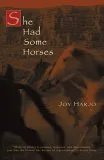
Joy Harjo uses the central image of the horse to map the psychological and physical landscapes of Native American womanhood. The collection tracks a sequence of internal conflicts, moving from the geography of the Southwest to urban centers like Chicago and New York. Harjo describes specific instances of institutional violence, the displacement of her Creek heritage, and the persistence of survival amidst poverty. The title poem categorizes disparate human traits and fears into a thundering herd, personifying contradictory impulses of hatred, prayer, and silence.
Readers of contemporary Indigenous literature and feminist poetry seek this work to understand the intersections of tribal identity and modern survival. It serves as a study in rhythmic structure and the use of repetition to build narrative intensity. The reader gains a specific vocabulary for articulating personal trauma and cultural endurance. By the final page, one observes how Harjo reconstructs a fragmented self through the reclamation of ancestral memory and the naming of ghosts.
- Published
- 1982
- Language
- EN