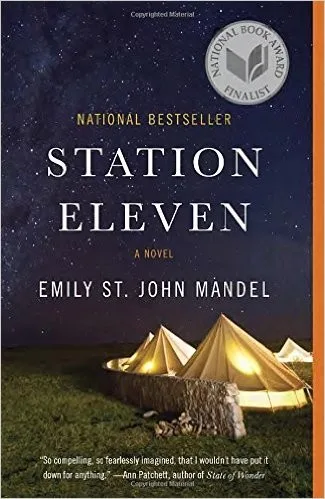
The narrative begins with a stage actor dying of a heart attack during a production of King Lear, moments before a Georgia Flu pandemic kills most of the global population. Twenty years later, Kirsten Raymonde travels through the Great Lakes region with the Traveling Symphony, an orchestral and theatrical troupe performing Shakespeare for scattered settlements. The plot connects Kirsten’s survival to the pre-collapse life of the deceased actor through two copies of a handmade comic book titled Station Eleven. As the troupe encounters a violent prophet claiming divine authority over small towns, the story reveals how art and memory link various survivors and victims across decades.
This book is for readers interested in the endurance of human culture after the collapse of modern infrastructure. People read it to see how civilizations maintain identity through music, theater, and artifacts when electricity and medicine disappear. The reader walks away with a perspective on the fragility of global supply chains and the observation that survival alone is insufficient without the preservation of artistic expression. It provides a look at how history is remembered and distorted by those born after the world ends.
Insights from Station Eleven
“Survival is insufficient.”
Kirsten keeps those old comic books like they are sacred relics. It shows how we cling to art when everything else falls apart.
“I've been kind of stuck lately.”
Arthur Leander died on stage right before the world ended. He never knew his normal life was the very last of its kind.
“No more flight. No more towns lit up at night.”
The memory of electricity is what haunts the older survivors most. They miss the hum of a refrigerator or the glow of a porch light.
Jeevan stepped out of a theater and into a blizzard to buy carts of water. He changed his entire life in a single hour of panic.
- Published
- 2014
- Publisher
- Knopf
- ISBN
- 9780385353311
- Language
- EN