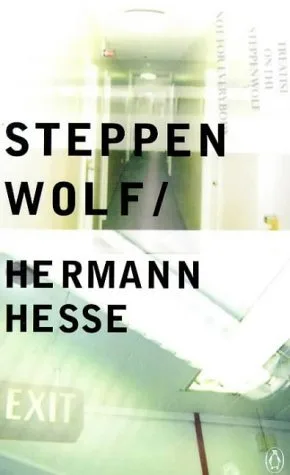
Harry Haller is a middle-aged intellectual living in a rented room, paralyzed by a perceived duality between his refined human persona and a savage, solitary identity he calls the Steppenwolf. He contemplates suicide until he encounters Hermine, a courtesan who forces him to engage with the sensory world through dancing, jazz, and drug-induced visions. The narrative culminates in the Magic Theater, a surrealist mental space where Haller witnesses various versions of his own psyche through a series of symbolic doors, ultimately facing a trial for his inability to find humor in existence.
People who feel alienated from bourgeois society or struggle with the fragmentation of their own personalities read this for its psychological honesty. The book appeals to those experiencing a mid-life reckoning with their discarded desires and intellectual pretensions. A reader finishes the text with a strategy for integrating their conflicting impulses, learning that the self is not a single entity but a thousand facets that must be navigated with irony and laughter rather than despair.
Deep, inward-looking, open-ended and thought-provoking; a moderate read.
Best for readers like The Wisdom Collector. Which reader are you?
Insights from Steppenwolf
“He had two natures, a human and a wolfish one.”
Harry feels like a wolf trapped in a man's suit. Most of us are just hiding different animals under our skin.
“I was a beast that did not understand the world.”
Living only for the mind starts to feel like a slow death. Harry realizes his books and music can't keep him warm at night.
“You have a picture of life within you, and you want the world to correspond to it.”
Hermine shows up and sees right through him. She reminds me that we need someone to force us onto the dance floor.
“Man is not a fixed and permanent form.”
The Magic Theater is just a mirror for the soul. It shows that we aren't just one person. We are thousands of people at once.
- Published
- 1927
- Publisher
- Penguin Books
- Language
- EN