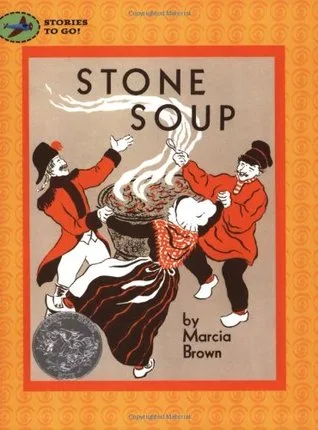
Set in a small village, the story follows three weary soldiers who arrive in a community where the inhabitants have hidden all their food out of fear. When the villagers deny them a meal, the soldiers announce they will make soup from stones. They boil water in a large cauldron and drop in three flat rocks, piquing the curiosity of the locals. By suggesting the soup only needs a few garnishings, the soldiers persuade the townspeople to contribute carrots, cabbage, beef, and seasonings until a feast is created for everyone.
This book is for children and educators who study community cooperation and collective problem-solving. Readers observe how the soldiers use psychology and suggestion to turn a scarcity mindset into an environment of abundance. Children see that a group can achieve significant results through small individual contributions. By the end, the reader understands how shared effort and openness can overcome distrust and benefit a whole community.
Insights from Stone Soup
“They hid their barley in the hay in the loft.”
Stinginess usually comes from a place of fear. Those villagers hid their food because they were scared of going hungry.
Curiosity is much stronger than suspicion. Even the most guarded people couldn't help but watch three soldiers boil a stone.
“But the soldiers were hungry.”
Hunger makes people very clever. The soldiers knew exactly how to make the town feel like they were part of a secret.
A tiny bit of contribution feels better than keeping a hoard to yourself. Adding one onion changed the whole mood of the square.
- Published
- 1947
- Language
- EN