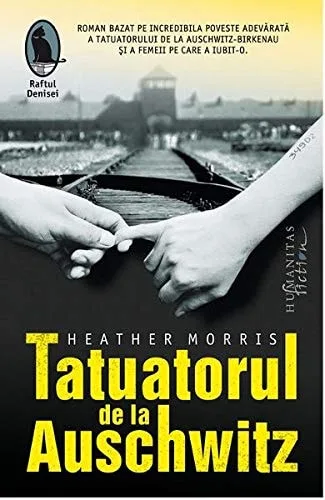
In 1942, Lale Sokolov arrives at the Auschwitz-Birkenau concentration camp, where his fluency in several languages leads to his appointment as the Tätowierer. His task involves permanently marking the skin of incoming prisoners with identification numbers. While performing this duty, he meets Gita Furman. The narrative follows their clandestine meetings and Lale’s efforts to trade stolen jewelry and money for food to keep Gita and other prisoners alive. They navigate the daily threat of execution and the cruelty of SS guards while attempting to survive the camp’s eventual liquidation.
Votaries of historical fiction and wartime romance read this account to observe how individual identity persists within a system designed for dehumanization. Readers encounter a specific perspective on camp logistics and the moral compromises required for survival. The book provides a look at the psychological endurance of survivors, leaving the reader with a factual sequence of how two people secretively maintained a relationship under constant surveillance. It appeals to those interested in the civilian experience of the Holocaust and the practicalities of underground resistance in terminal environments.
Insights from Tatuatorul de la Auschwitz
“Să alegi să trăiești este un act de sfidare.”
Lale și-a riscat viața pentru niște bucăți de ciocolată și câțiva poli. Schimbul ăsta mic ținea speranța vie în lagăr.
“M-am uitat în ochii ei și mi-am văzut viitorul.”
Mi-a rămas în minte cum Lale îi tatua numărul Gitei. S-a îndrăgostit de ea în cel mai negru loc de pe pământ.
Chiar și un tatuator are nevoie de protecție. Leon l-a ajutat pe Lale fără să ceară nimic în schimb.
“Dacă te trezești dimineața, este o zi bună.”
Mâncarea furată însemna mai mult decât calorii. Era dovada că umanitatea nu fusese complet distrusă de foame.
- Published
- 2019
- Publisher
- Humanitas Fiction
- ISBN
- 9786067794830
- Language
- RO