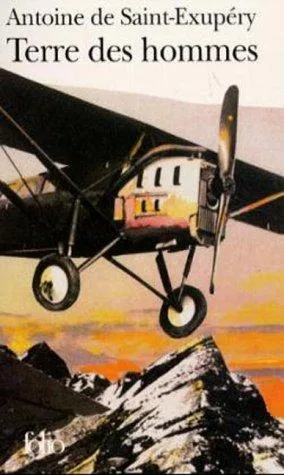
Antoine de Saint-Exupéry recounts his experiences as a pilot for the Aéropostale airmail service, specifically focusing on the 1930s expansion of flight routes across the Sahara Desert and the Andes Mountains. He describes the physical realities of early aviation, including the mechanical failures of the Latécoère aircraft and the navigational challenges of flying without modern radar. The narrative details his 1935 crash in the Libyan Desert, where he and his mechanic, André Prévot, survived for days without water or supplies. This memoir examines the human condition through the lens of extreme isolation and the technical transition from manual labor to machine-mediated work in hostile landscapes.
Pilots, historians, and students of human geography read this work to understand the psychological effects of professional duty and physical hardship. It attracts readers interested in how specialized roles—like those of navigators and pioneers—shape a person's relationship with the natural world. Readers walk away with a specific perspective on how camaraderie develops through shared risk and how technical failures force a confrontation with mortality. The text serves as a study of the responsibility individuals owe to their colleagues and the Stoic endurance required to operate at the edges of known territory.
- Published
- 1936
- Language
- EN