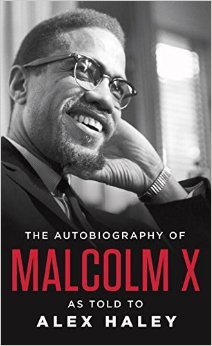
The Autobiography of Malcolm X
The narrative chronicles Malcolm Little’s evolution from a Midwestern childhood marked by white supremacist violence to his street life as a hustler and thief in Harlem. It details his incarceration and subsequent conversion to the Nation of Islam under Elijah Muhammad’s leadership, where he adopted the name Malcolm X and became a central figure in the Black nationalist movement. The account concludes with his pilgrimage to Mecca, his break from the Nation, and his final transition toward internationalism and human rights advocacy prior to his 1965 assassination.
This memoir serves students of the American Civil Rights era and those researching the intersections of religion and racial politics. Readers learn about the psychological mechanisms of systemic racism and the intellectual process of radical ideological shifts. The book provides a historical framework for understanding Black militancy and the internal conflicts within mid-century liberation movements. Readers obtain a firsthand perspective on the social conditions of urban poverty and the specific theological developments of the Nation of Islam.
Insights from The Autobiography of Malcolm X
“The only way to be a successful player is to have a short memory.”
Living in Harlem as Detroit Red showed how fast a person can lose themselves. He was just trying to survive the hustle. It makes you wonder who you would become in those streets.
“Bimbi made me feel that I had to learn some things.”
Prison was where he actually found freedom. He copied the entire dictionary by hand just to learn how to speak his truth. That kind of hunger for knowledge is rare.
“I was no longer a racist.”
Watching his views on race change after his trip to Mecca is the most moving part. He saw people of all colors eating and praying together. It broke his old world apart.
“Our family was unit no more.”
The way he describes his mother's breakdown is heartbreaking. The state just picked their family apart piece by piece. It shows how systems can destroy a home without trying.
- Published
- 1965
- Publisher
- One World
- ISBN
- 9781101967805
- Language
- EN
Quotes by Malcolm X
More →If you have no critics you'll likely have no success.
The future belongs to those who prepare for it today.