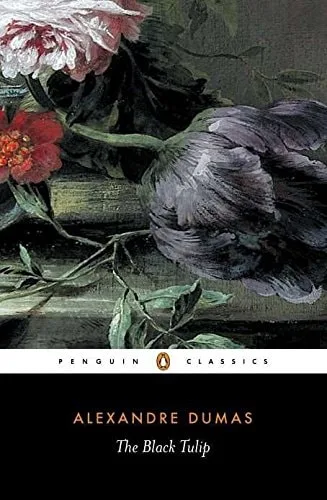
Set in the 1672 Dutch Republic, the plot follows Cornelius van Baerle, a wealthy botanist focused on winning a grand prize for cultivating a black tulip. His quiet life ends when a jealous neighbor frames him for political treason, leading to his imprisonment during a period of violent national unrest. While confined at Loevestein, Cornelius relies on the jailer's daughter, Rosa, to protect his secret bulbs. Their partnership involves hiding the flowers from rivals and navigating the deadly consequences of the Orangist and De Witt political factions.
Historical fiction enthusiasts read this edition to understand the intersection of obsessive horticulture and seventeenth-century European politics. The translation by Robin Buss provides a clear look at how Dutch "tulip mania" moved from a financial bubble to a personal quest for perfection. Readers finish the book with a specific knowledge of early Dutch prison systems, the brutal lynching of the De Witt brothers, and the technical difficulties inherent in cross-breeding rare flora.
Insights from The Black Tulip
“To have found an occupation for one's life is to have escaped from death.”
Cornelius manages to stay sane in a tiny cell just by thinking about flower bulbs. It shows how having a quiet obsession can save you when everything else is gone.
“The mob is a blind and cruel executioner.”
The way the mob treats the De Witt brothers at the start is terrifying. It makes you realize how quickly a crowd can turn into a monster.
Rosa is the real hero because she learns to read just to save the man she loves. Literacy becomes her greatest weapon against a corrupt system.
“He was no longer a lover of tulips, he was a murderer of them.”
Boxtel destroys his own life because he cannot stand someone else's success. Jealousy is a poison that eats the person carrying it first.
- Published
- 2003
- Publisher
- Penguin Classics
- ISBN
- 9780140448924
- Language
- EN