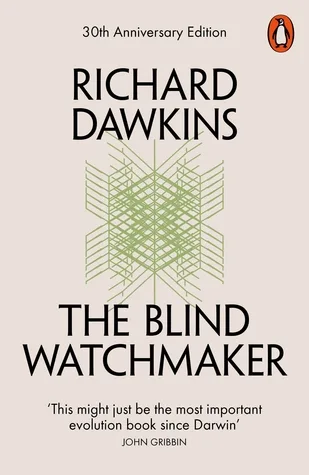
The Blind Watchmaker: Why the Evidence of Evolution Reveals a Universe Without Design
Richard Dawkins frames his argument against the watchmaker analogy proposed by William Paley, which suggested that complex biological structures necessitate an intelligent designer. Dawkins counters this by explaining how cumulative natural selection acts as a blind, unconscious process capable of assembling intricate systems without a preconceived goal. He details the mechanisms of genetic mutations and the filtering effects of survival, using computer simulations like the biomorphs program to demonstrate how simple rules generate immense complexity. The text clarifies why the eye and other sophisticated organs are physiological achievements of gradual adaptation rather than sudden creation.
Science students and proponents of secular naturalism read this book to understand the specific mechanics behind biological complexity. It provides a technical framework for explaining how order arises from randomness without supernatural intervention. Readers walk away with a functional understanding of why intelligent design is a logical fallacy when applied to the fossil record and genetics. The book equips those interested in evolutionary biology with the specific arguments needed to distinguish between intentional craftsmanship and the algorithmic results of self-replicating molecules.
- Published
- 1986
- Language
- EN