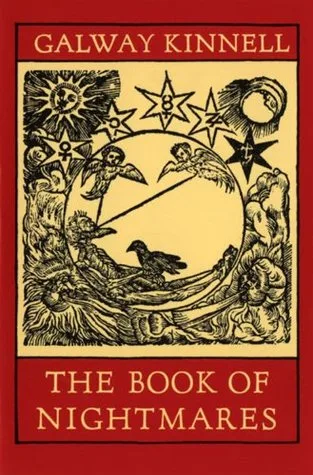
Galway Kinnell structures this ten-part poem as a sequence of meditations centered on his young children, Maud and Fergus. He balances the visceral details of biological life, such as a hen’s head held under an arm or the smell of burning hair, against the absolute certainty of extinction. The text traces a path through the landscape of the Minnesota woods and the debris of urban life to examine how human consciousness deals with its own transience. Kinnell uses images of iron, blood, and stars to link the physical pain of birth directly to the inevitability of the grave, arguing that death is the necessary completion of the senses.
Readers who value rigorous, unsentimental poetry go to this book to confront the mechanics of mortality. It attracts those interested in the junction where private domestic life meets the broader cycle of decay and regeneration found in the natural world. Instead of offering comfort, the text provides a framework for acknowledging fear and physical frailty. The reader finishes the collection with a heightened awareness of their own bodily presence and a vocabulary for describing the temporary nature of human connections.
- Published
- 1971
- Language
- EN
![The United States in Literature [with three long stories] -- Seventh Edition](https://kwbjoqloympvbpzbrfja.supabase.co/storage/v1/object/public/scan-images/catalog/f48162c6-7eb5-41ec-933b-9c4218489c7d-full.webp)