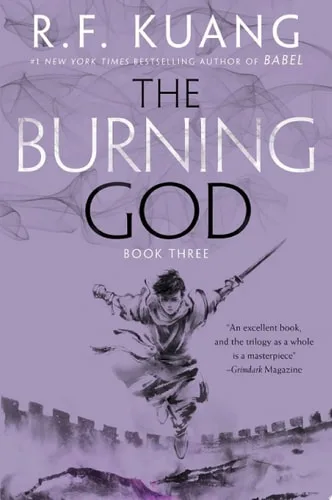
After surviving the destruction of a civil war and the Hesperian occupation of southern Nikara, Fang Runin returns to her roots in the Rooster Province to lead a peasant uprising. Rin abandons her reliance on military generals to command a volunteer force of rural citizens, intent on overthrowing the Dragon Republic and purging the mainland of foreign influence. She remains tethered to the Phoenix, a volatile god that grants her pyrokinesis but erodes her sanity. As she maneuvers through political betrayals and famine, Rin must choose between total scorched-earth victory and the preservation of the land she aims to save.
This conclusion to the Poppy War trilogy serves readers who want a grim depiction of the aftermath of revolution and the logistical realities of guerrilla warfare. It appeals to those interested in the psychological toll of absolute power and the cycle of state-sponsored violence. Readers finish the book with a concrete understanding of how historical trauma and colonial intervention shape internal national conflicts. The narrative provides a blunt look at the human cost of leadership and the difficulty of rebuilding a society from ashes.
Insights from The Burning God
“I am the Phoenix.”
Rin ends up exactly where she started. She is still just a girl from Tikany who realized the world is too heavy to hold.
“I have become a herald of high disaster.”
Rin finally realizes she can win every battle and still lose the entire country. Victory feels identical to ashes by the time she reaches the end.
“We were never people to them. We were only ever weapons.”
Nezha and Rin are two halves of a broken mirror. They keep hurting each other because they are the only ones who truly see the damage.
“The gods are not your friends.”
The gods do not care about justice or liberation. They just want to burn through a human heart until nothing else remains.
- Published
- 2021
- Publisher
- HarperCollins
- ISBN
- 9780062662651
- Language
- EN