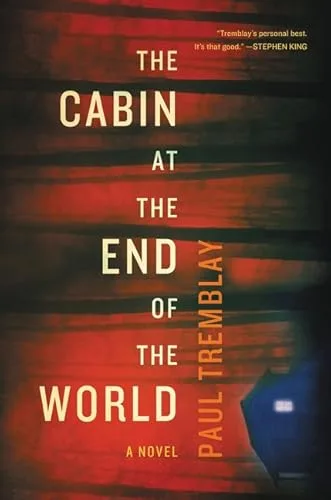
Seven-year-old Wen and her fathers, Eric and Andrew, are vacationing at a remote New Hampshire cabin when four strangers armed with specialized tools surround the house. Led by a soft-spoken man named Leonard, the intruders force their way inside and tie the family to chairs. They present a lethal ultimatum: the family must choose one member to kill to prevent a looming global apocalypse. As the captives face psychological pressure and physical violence, they must decide if the strangers are delusional cultists or harbingers of the world's end.
This thriller serves readers who enjoy home-invasion narratives and ethical dilemmas regarding faith versus logic. It targets those who prefer ambiguous endings over neatly resolved plots. The reader finishes with a heightened sense of anxiety about how uncertainty influences human choice. By stripping away external information, the text forces the audience to grapple with the same impossible question as the characters: would you commit an unthinkable act to save a world that might not actually be in danger?
Insights from The Cabin at the End of the World
“The cabin is a stage.”
Wen catching grasshoppers in the jar is so peaceful. It makes the knock on the door feel much worse.
“A part of him thought he was being punished.”
Andrew keeps looking for reasons why these strangers picked them. Some things happen without a logic you can find.
“I am a high school teacher and a coach.”
Leonard is so polite while holding a weapon. It is terrifying how kindness can hide such a dark purpose.
“The world is ending.”
The news on the TV might be a coincidence or a sign. You realize how much you rely on patterns to feel safe.
- Published
- 2018
- Publisher
- William Morrow
- ISBN
- 9780062679109
- Language
- EN