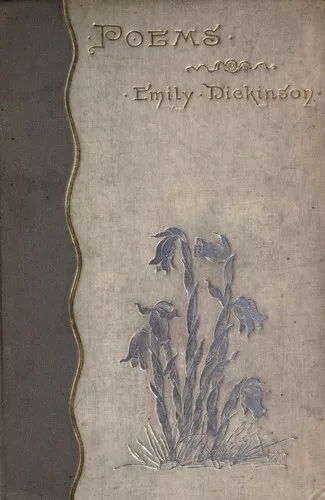
This 1924 edition gathers the lyrical output of a recluse who wrote primarily on scraps of paper and sewn fascicles. The verses prioritize brevity, characterized by frequent dashes, unconventional capitalization, and slant rhymes. Dickinson addresses the specific mechanics of mortality, the physical properties of the Massachusetts landscape, and the psychological state of solitude. She documents the arrival of birds and insects with scientific precision while analyzing the internal experience of pain, loss, and spiritual uncertainty. The collection organizes these fragments into categories such as Life, Nature, Love, and Time, revealing a philosophy centered on the intensity of the present moment and the vastness of the private mind.
Readers interested in the evolution of American literature and the technical aspects of poetic meter find this volume fundamental. Those who study linguistics or creative writing examine Dickinson’s ability to condense complex metaphysical arguments into four-line stanzas. The book serves individuals seeking a vocabulary for grief or those who find value in quiet, domestic observation. A reader walks away with a framework for viewing the ordinary world as a series of small, significant mysteries and an understanding of how silence and space function as active elements in written language.
- Published
- 1924
- Language
- EN
Quotes by Emily Dickinson
More →Tell the truth but tell it slant — success in circuit lies.
Hope is the thing with feathers that perches in the soul and sings the tune without the words and never stops at all.
![The United States in Literature [with three long stories] -- Seventh Edition](https://kwbjoqloympvbpzbrfja.supabase.co/storage/v1/object/public/scan-images/catalog/f48162c6-7eb5-41ec-933b-9c4218489c7d-full.webp)