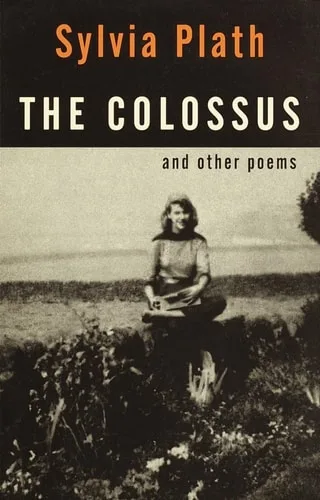
Sylvia Plath’s first collection focuses on the rigid architecture of the natural world and the weight of ancestral memory. The poems map out landscapes of salt marshes, rocky coasts, and skeletal ruins where the speaker observes the indifferent mechanisms of mushrooms, stones, and insects. Central to the work is the titular figure of the Colossus, a fragmented paternal monument that the narrator attempts to mend and understand. Plath employs formal meter and precise vocabulary to describe the tension between domestic domesticity and the cold, physical reality of the earth.
This book serves readers interested in technical craftsmanship and the early development of mid-century American verse. It attracts those who value linguistic precision over sprawling confession, offering a study in how traditional forms can contain high psychological pressure. The reader gains a toolkit for observing the environment through a clinical lens, learning to identify the specific visual textures of decay and survival. By the final page, one understands the specific transition from classical imitation to the sharp, idiosyncratic imagery that defined Plath’s later voice.
Insights from The Colossus and Other Poems
“Our hammers, our rams, / Silently widening the cracks.”
Mushrooms are actually terrifying. They grow in the dark and take over everything while we sleep. I will never look at a garden the same way.
“I am a miner. The light burns blue.”
Being a woman here feels like being an insect under a microscope. Someone is always watching you twitch.
“The stars go over the trees, a sort of x-ray.”
Nature does not care if you live or die. The stars are hard and cold and they are not helping you.
“Love is a shadow. How you lie and cry after it.”
She writes like she is trying to scream without making any noise. The pressure in the words is almost physical.
- Published
- 1998
- Publisher
- Vintage
- ISBN
- 9780375704468
- Language
- EN