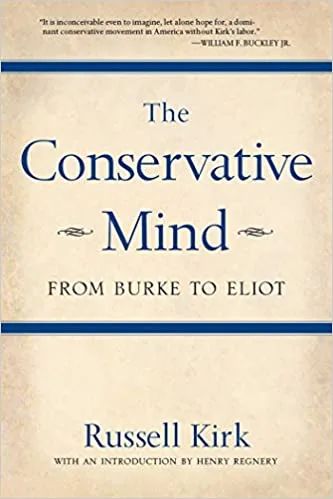
Russell Kirk argues that American and British conservatism represents a coherent intellectual tradition rooted in the preservation of local customs and the moral order. He traces this lineage from Edmund Burke’s reaction against the French Revolution through the writings of John Adams, Nathaniel Hawthorne, and T.S. Eliot. Kirk identifies six core canons of conservative thought, including a belief in a transcendent moral purpose, a preference for social diversity over egalitarian uniformity, and the conviction that property and freedom are inseparably linked. The text positions conservatism as an active defense of historical continuity against radical innovation and centralized state planning.
Political theorists and history students read this volume to understand the philosophical foundations of the modern American Right. The book serves as a map for those seeking to move beyond mere economic policy into the realms of cultural preservation and character. Readers walk away with a vocabulary for defending local identity and a framework for interpreting how tradition functions as a safeguard against social disintegration. It provides the historical context necessary to distinguish classic conservatism from modern libertarianism or reactionary populism.
- Published
- 1953
- Language
- EN
More by Russell Kirk
See all →
Readers also enjoyed