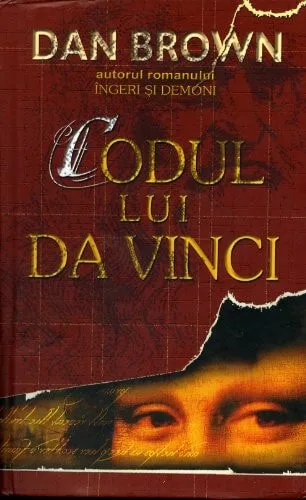
Symbologist Robert Langdon and cryptologist Sophie Neveu investigate the murder of a Louvre curator whose body was left in a symbolic pose surrounded by hidden ciphers. Their quest moves across Paris and London, following a trail of clues embedded in Leonardo da Vinci’s paintings. This search uncovers a conflict between the Priory of Sion and the Catholic organization Opus Dei over the identity of the Holy Grail. The narrative centers on the theory that the Grail is not a physical chalice but a bloodline descending from Jesus Christ and Mary Magdalene.
This novel serves readers who enjoy historical puzzles and conspiracy theories centered on religious iconography. It appeals to those fascinated by secret societies and the possibility of suppressed history within the early Church. Readers gain a crash course in symbology, anagrams, and the Golden Ratio while considering how institutional power shapes historical narratives. The text provides a fast-paced hunt through European landmarks and art history for an audience that values a plot driven by riddles and hidden meanings.
Insights from The Da Vinci Code
“Symbols are a language that can help us understand our past.”
Symbols are hidden in plain sight all over Paris. Saunière used his own blood to leave a message because he knew the truth was worth dying for.
“Everyone loves a conspiracy.”
Sophie Neveu spent years hating her grandfather for a ritual she didn't understand. It turns out he was just trying to preserve a sacred history.
“Pain is good.”
Silas represents how far someone will go when they think they are doing God's work. His physical pain was a way to ground his faith.
“The walls have ears.”
The Last Supper looks different once you see the person next to Jesus as a woman. It changes the entire meaning of the Holy Grail.
- Published
- 2004
- Publisher
- Random House
- ISBN
- 9780593054253
- Language
- EN
![The Da Vinci Code [adaptation]](https://kwbjoqloympvbpzbrfja.supabase.co/storage/v1/object/public/scan-images/catalog/covers/1eb6ba6b-c243-4849-afef-4ac54f0a0505-full.webp)