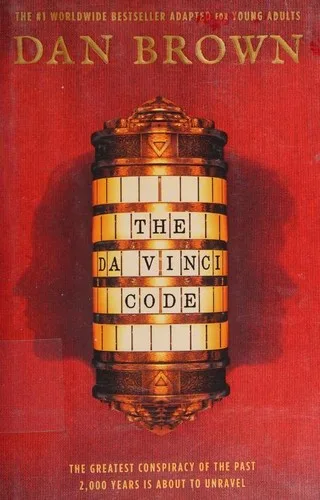
Symbologist Robert Langdon investigates a murder at the Louvre Museum, where a curator’s body is surrounded by complex riddles and Fibonacci sequences. Alongside cryptologist Sophie Neveu, Langdon deciphers hidden messages buried in Leonardo da Vinci’s paintings, including The Last Supper and the Mona Lisa. Their pursuit reveals a historical conflict between the Priory of Sion and Opus Dei regarding the bloodline of Mary Magdalene and Jesus Christ. The narrative follows their escape from the French police as they track the Holy Grail through ancient monuments and secret archives.
This version is edited for young adult readers seeking a fast-moving mystery centered on history and art theory. It appeals to audiences interested in code-breaking, architectural puzzles, and alternative interpretations of religious history. Readers gain a basic understanding of symbology and the alleged hidden meanings within Renaissance masterworks. The book provides a mechanical look at how historical symbols represent secret organizations and how those icons influence modern perceptions of the past.
Practical, outward-looking, growth-minded, clear-cut and escapist; an easy read.
Best for readers like The Curious Generalist. Which reader are you?
Insights from The Da Vinci Code
“Symbols are a language that can help us understand our past.”
Symbols are hidden in plain sight all over Paris. Saunière used his own blood to leave a message because he knew the truth was worth dying for.
“Everyone loves a conspiracy.”
Sophie Neveu spent years hating her grandfather for a ritual she didn't understand. It turns out he was just trying to preserve a sacred history.
“Pain is good.”
Silas represents how far someone will go when they think they are doing God's work. His physical pain was a way to ground his faith.
“The walls have ears.”
The Last Supper looks different once you see the person next to Jesus as a woman. It changes the entire meaning of the Holy Grail.
- Published
- 2016
- Language
- EN