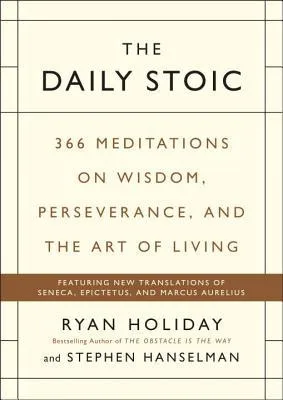
The Daily Stoic: 366 Meditations on Wisdom, Perseverance, and the Art of Living
The Daily Stoic provides a structured calendar of ancient Greek and Roman philosophy adapted for modern daily life. Ryan Holiday organizes the text into 366 entries, offering one translation and commentary for every day of the year, including leap years. The content centers on the three disciplines of Stoicism: perception, action, and will. Readers encounter direct passages from Marcus Aurelius, Seneca, and Epictetus regarding emotional regulation, the dichotomy of control, and cognitive reframing. The work translates abstract moral philosophy into specific protocols for managing stress and maintaining personal integrity under pressure.
This book serves professionals, students, and anyone seeking a pragmatic framework for mental resilience. Readers use these short daily exercises to build a habit of detached observation and logical decision-making. By the end of the year, the reader gains a toolkit for distinguishing between external events and internal reactions. This practice helps individuals reduce anxiety caused by uncontrollable circumstances and increases focus on personal character and purposeful work. The format suits those who prefer incremental learning over dense academic study.
Insights from The Daily Stoic: 366 Meditations on Wisdom, Perseverance, and the Art of Living
“Nowhere can they find a quieter or more untroubled retreat than in their own soul.”
Morning routines don't need to be fancy. Just checking in with your own mind before the world starts screaming helps.
“When the light has been removed and my wife has fallen silent, I examine my entire day.”
Mornings are for preparation and evenings are for reflection. Reviewing the day helps keep small mistakes from becoming permanent habits.
“Character is fate.”
Character isn't a fixed state. It is a series of tiny choices made every single hour of the day.
“The chief task in life is simply this: to identify and separate matters.”
Control feels like a huge category until you divide it. Most stress comes from trying to fix things that aren't mine to touch.
- Published
- 2016
- Language
- EN
More by Ryan Holiday
See all →

Readers also enjoyed