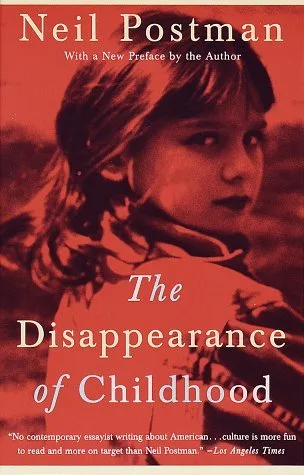
Neil Postman argues that childhood is a social artifact created by the printing press. He explores how the literacy gap once separated adults from children, shielding the young from mature secrets regarding sex, money, and violence. In this framework, adulthood was earned through the mastery of reading. Postman contends that the rise of television dismantled this divide by utilizing an all-access medium that requires no training to decode. As visual media replaces the printed word, the boundary between the two stages of life dissolves, leading to the adultlike child and the childlike adult.
Educators, media theorists, and parents read this book to understand how electronic communication alters cognitive development and social behavior. The text provides a historical perspective on why traditional schooling feels increasingly disconnected from a media-saturated environment. Readers finish the book with a lens for analyzing how non-discursive entertainment erodes the concept of shame and changes the definition of maturity. It offers a specific sociological explanation for the shift in how young people consume information and participate in adult culture.
- Published
- 1982
- Language
- EN