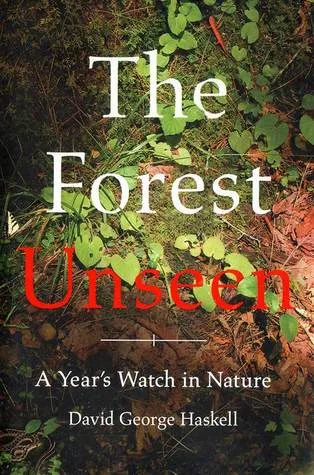
David George Haskell observes a single square meter of old-growth Tennessee forest, known as a mandala, through the progression of the four seasons. By visiting this specific patch of earth repeatedly, he documents the minute biological interactions occurring within the leaf litter and soil. He connects these local observations to global evolutionary history, detailing the physiological mechanisms of freezing wood frogs, the chemical warfare utilized by fungal networks, and the complex reproductive cycles of spring wildflowers. The narrative links tiny incidents, like a shrew’s heartbeat or a bird’s migration, to broader principles of ecology and physics.
Naturalists and biology students read this book to understand how immense environmental systems function on a microscopic scale. Readers gain a technical perspective on biodiversity and the specific adaptations required for species survival in a temperate woodland. The text provides a framework for looking at local environments with scientific precision, teaching the audience to recognize the historical and biological significance of common organisms. A reader walks away with a refined ability to identify ecological patterns and an objective understanding of how small-scale occurrences influence the planet's biosphere.
- Published
- 2012
- Language
- EN