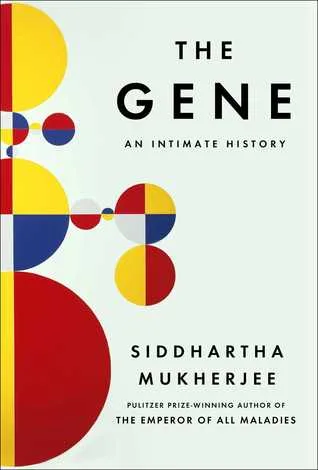
Siddhartha Mukherjee traces the biography of the gene, beginning with Aristotelian theories of heredity and moving through Gregor Mendel’s pea plant experiments and Charles Darwin’s missing mechanism for evolution. The narrative details the discovery of the double helix structure by Watson, Crick, Wilkins, and Franklin, alongside the rise of recombinant DNA technology. Mukherjee anchors these scientific milestones in his own family history of mental illness, specifically schizophrenia and bipolar disorder. He analyzes the dark history of the eugenics movement and concludes with contemporary debates surrounding CRISPR-Cas9 base editing and the ethical boundaries of human germline modification.
This book is written for readers interested in how biological blueprints dictate physical traits and psychological predispositions. Students of medicine and genetics read it to understand the technical progression of molecular biology and the historical context of the Human Genome Project. The reader walks away with a functional vocabulary for understanding inheritance, an awareness of the physical nature of identity, and a framework for evaluating the consequences of manipulating our own genetic code.
Insights from The Gene: An Intimate History
“The atom of biology is the gene.”
Mendel figured out inheritance by counting thousands of pea plants in a monastery garden. He found that traits don't just blend like paint. They stay distinct and hidden across generations.
“If the genome is a piano, then the environment plays the music.”
We often think genes are a blueprint for who we are. It is actually more like a recipe that constantly updates based on our surroundings. Nature and nurture are basically the same thing.
Science can move faster than our ability to be good people. The history of eugenics shows how easily we turn biology into a weapon against others. It happened so quickly in America and Germany.
“Normalcy is the exception; variation is the rule.”
Small errors in a genetic sequence can cause massive suffering or incredible beauty. Variation is the only reason life survives at all. We need the mistakes to keep going.
- Published
- 2016
- Publisher
- Scribner
- ISBN
- 9781476733524
- Language
- EN