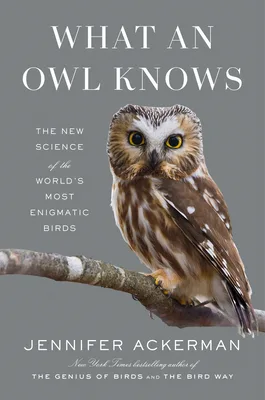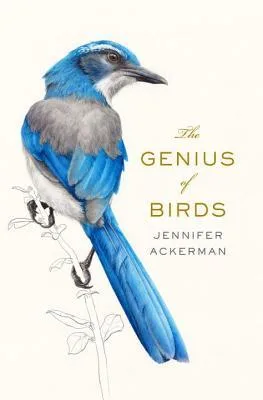
Jennifer Ackerman examines the biological mechanisms of avian intelligence, countering the historical misconception of the bird brain as primitive. She documents how species like New Caledonian crows manufacture hooks for foraging and how western scrub-jays demonstrate episodic memory by planning for future hunger. The text explains the high neuronal density in bird forebrains, which allows for sophisticated problem-solving, complex vocal mimicry, and intricate social structures. Ackerman details specific field studies on spatial mapping in nutcrackers and the aesthetic decision-making found in the architecture of bowerbird nests.
Pet owners, birdwatchers, and biology students use this book to bridge the gap between human and animal cognition. Readers gain a technical understanding of neuroplasticity and evolutionary biology without formal academic jargon. By studying the cognitive feats of common backyard species and exotic dwellers alike, the reader learns to identify subtle displays of intent and social maneuvering in the natural world. This shifted perspective replaces a human-centric view of intellect with a framework that recognizes multiple forms of technical and social brilliance across different evolutionary paths.
- Published
- 2016
- Language
- EN