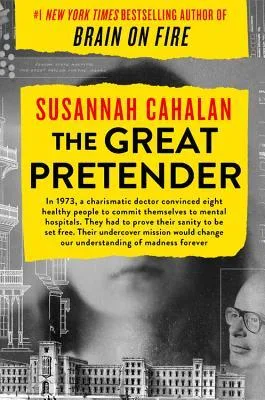
The Great Pretender: The Undercover Mission That Changed Our Understanding of Madness
Susannah Cahalan investigates the 1973 Rosenhan experiment, a landmark study where eight sane volunteers gained admission to psychiatric hospitals by faking hallucinations. The resulting paper, On Being Sane in Insane Places, claimed that staff could not distinguish between health and illness, leading to the mass closure of asylums and the adoption of the DSM-III. However, Cahalan’s archival research uncovers evidence of manipulated data and missing participants. She tracks down the original "pseudopatients" to determine if the study was a deliberate fabrication that permanently destabilized American psychiatric care.
This book serves researchers, medical historians, and readers interested in the reliability of diagnostic frameworks. It provides a skeptical look at how one influential study shifted the focus of mental healthcare from long-term institutionalization to pharmaceutical management. Readers gain a technical understanding of how data errors can shape public policy. The text functions as a cautionary analysis of the peer-review process and the precarious boundary between medical protocol and subjective interpretation.
Balanced in tone; a moderate read.
Best for readers like The Story Seeker. Which reader are you?
- Published
- 2019
- Language
- EN