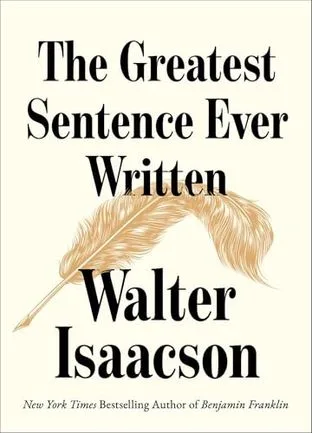
Walter Isaacson examines the second sentence of the American Declaration of Independence, focusing specifically on the evolution of the phrase regarding self-evident truths. The narrative tracks the collaborative editing process between Thomas Jefferson and Benjamin Franklin, highlighting how specific word choices shifted the document’s philosophical foundation from a religious claim to one rooted in scientific rationality and natural law. Isaacson breaks down the enlightenment frameworks that informed the committee of five, detailing how they constructed a universal argument for human equality and government consent.
Historians and political science students read this architectural study of language to understand how specific vocabulary shapes national identity. Readers learn the precise mechanical changes made to the draft and the logical reasoning behind each revision. By analyzing the intersection of eighteenth-century philosophy and revolutionary politics, the audience gains a technical understanding of how a single string of words established a definitive legal and moral standard for democracy that continues to influence global governance.
- Publisher
- Simon & Schuster
- ISBN
- 9781982181314
- Language
- EN

![స్టీవ్ జాబ్స్ [Steve Jobs]](https://kwbjoqloympvbpzbrfja.supabase.co/storage/v1/object/public/scan-images/catalog/24050299-311a-4533-9994-e23b28c02926-full.webp)