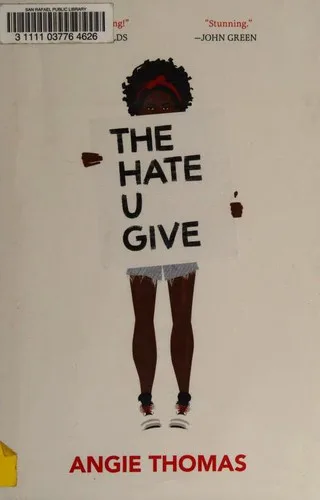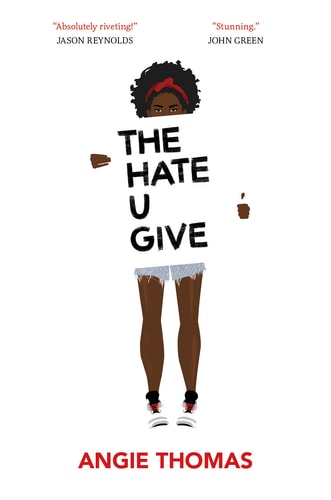
Sixteen-year-old Starr Carter lives a split existence, balancing her time between the impoverished Garden Heights neighborhood and Williamson Prep, an elite private school. Her world fractures when she witnesses a white police officer shoot and kill her unarmed childhood friend, Khalil, during a traffic stop. As Khalil’s death becomes a national news story, Starr faces pressure from local gang leaders, activist groups, and law enforcement. She struggles with the decision to testify before a grand jury while her school friends remain oblivious to her proximity to the tragedy.
Readers interested in the intersections of systemic racism and police brutality within the American legal system value this realistic portrayal of activism. It appeals to those seeking to understand the psychological toll of code-switching and the social friction between different socioeconomic environments. Individuals finish the book with a clear perspective on how personal tragedy ignites social protest and the specific risks involved when a marginalized witness chooses to challenge institutional authority.
Insights from The Hate U Give (The Hate U Give, #1)
“I'm the girl who saw a guy get killed, and I'm the girl who's from one of the 'bad' neighborhoods.”
Starr feels like two different people depending on which zip code she is in. It makes her feel like she is failing everyone by trying to fit in everywhere.
“His name was Khalil. He lived.”
Khalil was just a kid who liked Harry Potter and hairbrushes. Seeing the news turn him into a monster just to protect a cop is heartbreaking.
“A hairbrush isn't a gun.”
The hairbrush moment haunts me. A harmless object became a weapon because of the skin color of the person holding it.
Maverick and Uncle Carlos show how complicated family loyalty gets. One represents the streets and the other represents the system.
- Published
- 2017
- Publisher
- Clarion Books
- ISBN
- 9780062498533
- Language
- EN