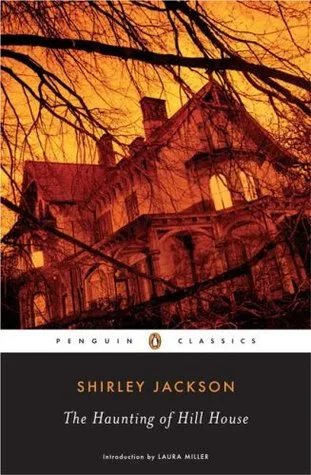
Dr. John Montague, a ghost hunter, invites three strangers to stay at Hill House, an 80-year-old mansion with a history of tragedy. Among them is Eleanor Vance, a woman seeking independence after a decade spent caring for her invalid mother. As the group documents banging doors and shifting architecture, the house focuses its attention on Eleanor. The narrative tracks her mental dissolution as the property’s physical layout manipulates her sense of reality, eventually leading the group to question whether the disturbances originate from the walls or from Eleanor’s subconscious.
Readers who enjoy psychological tension and Gothic settings choose this novel to study the relationship between isolation and madness. It appeals to those interested in unreliable narration and the ways childhood trauma shapes adult vulnerability. Instead of jump scares, the reader gains a chilling perspective on how an environment can consume an individual's identity. By the final page, one is left to decide if the house is a sentient monster or merely a mirror reflecting a broken mind.
Deep, inward-looking and open-ended; a moderate read.
Best for readers like The Empathetic Explorer. Which reader are you?
Insights from The Haunting of Hill House
“I am disappearing again, she thought.”
Eleanor spent her whole life trapped by her mother. She just wanted to belong somewhere. Even a house that hates her feels like a home.
“No live organism can continue for long to exist sanely under conditions of absolute reality.”
The way the house moves is so subtle. Doors close when you know you left them open. It makes you doubt your own eyes.
“Fear and guilt are sisters.”
The characters try to stay lighthearted with jokes and drinks. They are terrified of the silence. They talk so they don't have to listen.
“I don't like to be touched.”
Nell and Theo have this strange bond that turns mean so fast. They love each other one second and snap the next. It feels like sisters fighting for air.
- Published
- 1959
- Publisher
- Penguin Books
- ISBN
- 9780143134190
- Language
- EN