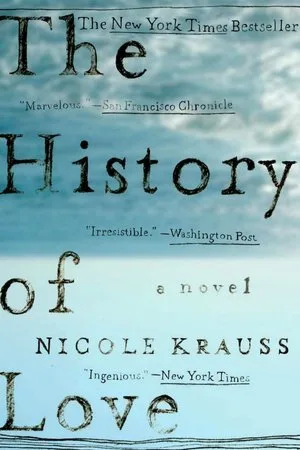
The story follows Leo Gursky, an elderly locksmith in New York who avoids solitude by making himself seen in public, unaware that a manual he wrote in Poland sixty years ago survived the Holocaust. Parallel to his life, fourteen-year-old Alma Singer searches for the person her mother named her after: a character in that very book. Their lives intersect through a lost manuscript, a series of letters, and the character of Zvi Litvinoff, who published Leo's words under his own name. The narrative tracks how a single text connects three generations across continents.
Readers interested in the persistence of memory and the ways people cope with grief will find value in this book. It appeals to those looking to understand how literary legacies bridge the gap between historical trauma and modern identity. A person finishes this story with a clearer perspective on how human connections survive physical distance and silence. It provides a framework for recognizing how individual legacies are preserved through the actions of strangers and the endurance of written language.
Inward-looking, contemplative and thought-provoking; a moderate read.
Best for readers like The Mindful Reader. Which reader are you?
Insights from The History of Love
“I try to make a point of being seen.”
Leo Gursky survives by making sure people see him. He drops things in shops just to hear his name called out.
“He named me after every girl in the book.”
Alma Singer was named after every woman in a lost book. It feels like she is carrying a whole world of ghosts.
“He wrote a book about her. And then he died.”
Writing a book can be a way of keeping someone alive. Even if they never read it. Even if they are gone.
“At the end, all that's left of you are your possessions.”
Loneliness makes people do strange things. Leo taps on the pipes to talk to his neighbors. He just wants to know someone is there.
- Published
- 2005
- Publisher
- W. W. Norton & Company
- ISBN
- 9780393342840
- Language
- EN