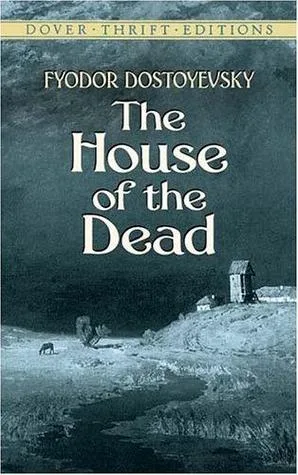
Alexandr Petrovich Goryanchikov, a nobleman sentenced to ten years of hard labor in Siberia for uxoricide, narrates his daily existence within a communal prison barracks. The narrative chronicles the crushing weight of the shackles, the hierarchy maintained between peasant convicts and former aristocrats, and the specific mechanics of survival under a brutal penal system. Dostoevsky documents the psychological effects of forced labor, the celebratory chaos of a prisoner-staged theatrical performance, and the inherent dignity maintained by the inmates despite their status as outcasts.
Sociologists and history enthusiasts read this semi-autobiographical account to understand the mid-nineteenth-century Russian penal colony. The book provides a detailed map of the criminal psyche and the social dynamics of isolated populations. Readers finish the text with a technical understanding of state-sanctioned punishment and a realization that the capacity for moral agency persists even within the most dehumanizing bureaucratic structures. It serves as a primary source for the study of human endurance under physical confinement.
- Published
- 1861
- Language
- EN