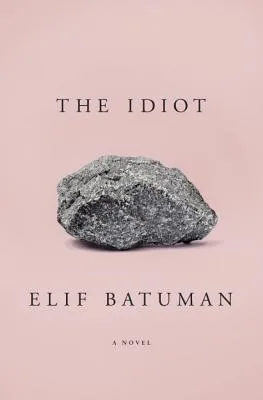
Set in 1995, the narrative follows Selin, a linguistics student navigating her first year at Harvard. She navigates the intersection of verbal systems and lived reality while corresponding via email with Ivan, an older Hungarian mathematics student. Their interaction relies on abstract syntax and philosophical tangents rather than physical proximity. Selin analyzes Sapir-Whorf theories and Russian grammar in classrooms, then travels to Hungary to teach English, attempting to reconcile her academic understanding of language with the practical complications of human desire.
This book serves readers interested in the mechanics of semiotics and the failure of communication. It appeals to those fascinated by the specific intellectual atmosphere of the early internet era and the technical structures of foreign languages. The reader gains a clinical observation of how adolescent uncertainty interacts with formal logic. Instead of a traditional resolution, the text provides a detailed record of how a person constructs an identity through the books they read and the sentences they write.
Inward-looking and thought-provoking; a moderate read.
Best for readers like The Empathetic Explorer. Which reader are you?
Insights from The Idiot
“I didn't know what the email was supposed to be. I just knew I wanted to send it.”
Selin spends so much time overthinking her emails to Ivan. It shows how language feels like a wall instead of a bridge. We try to be clever but end up saying nothing at all.
“I felt like I was in a movie, but I didn't know the plot.”
Living in a foreign country makes you feel like a child again. In Hungary, Selin has to navigate basic things without the right words. It reveals how much of our personality is just fluency.
“Everything was a metaphor. But what was it a metaphor for?”
First love is often just two people talking past each other. Selin and Ivan have these long, intellectual debates. They are close but never actually touch.
The classes Selin takes at Harvard feel as confusing as her dating life. Linguistics and art history don't give her the answers she wants. Real life doesn't fit into a syllabus.
- Published
- 2017
- Language
- EN