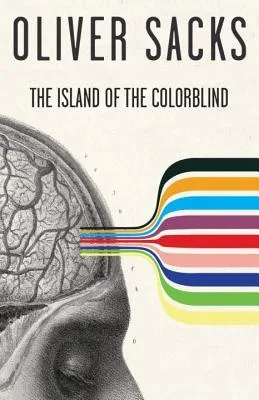
Oliver Sacks chronicles his travels to the Micronesian islands of Pingelap and Pohnpei to study a population with achromatopsia, a hereditary condition of total colorblindness and extreme light sensitivity. He examines how a restrictive genetic bottleneck caused by a 1775 typhoon led to this rare visual architecture becoming a cultural norm. Later, in Guam and Rota, he investigates Lytico-bodig, a mysterious neurodegenerative syndrome sharing characteristics with ALS, Parkinson’s, and Alzheimer’s. Sacks documents the intersection of botany, neurology, and geography, tracking how isolation shapes human biology and how the local environment influences the progression of endemic disease.
Readers interested in the relationship between rare medical conditions and isolated ecosystems choose this book for its integration of clinical insight and travelogue. It appeals to those studying genetics, neurobiology, and the history of medicine. The reader gains an understanding of how sensory experiences differ across neurological profiles and how distinct geographical settings act as natural laboratories for evolutionary biology. By the end, the reader recognizes the link between indigenous flora, such as the toxic cycad nut, and the long-term health patterns of specific island communities.
- Published
- 1997
- Language
- EN