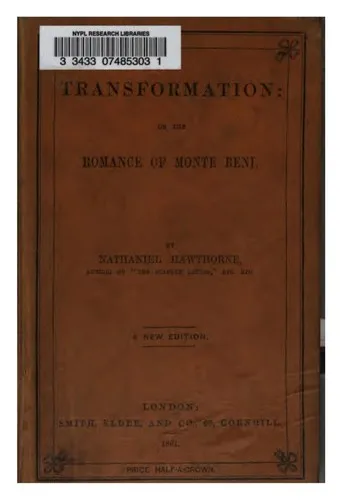
Set in mid-century Rome, the narrative follows three American artists—Kenyon, Hilda, and Miriam—and their Italian companion, Donatello. Donatello bears a physical resemblance to Praxiteles’s Marble Faun, suggesting a state of pre-moral innocence. The group’s dynamic shatters when Donatello commits a murder to protect Miriam from a mysterious stalker. This act triggers a descent into guilt and psychological isolation. The plot focuses on the transition from natural simplicity to the heavy burden of conscience, contrasting the weight of historical ruins with the fragility of human morality.
This book serves readers interested in the relationship between classical art and Christian theology. It appeals to those fascinated by the psychological impact of sin and the concept of the fortunate fall. Readers acquire a granular view of Roman architecture and sculpture through long descriptive passages. Someone who finishes this work gains an understanding of how Puritan moral frameworks interact with European aesthetic traditions, leaving the reader with a stark perspective on how collective history and individual crime shape the human soul.
- Published
- 1840
- Language
- EN