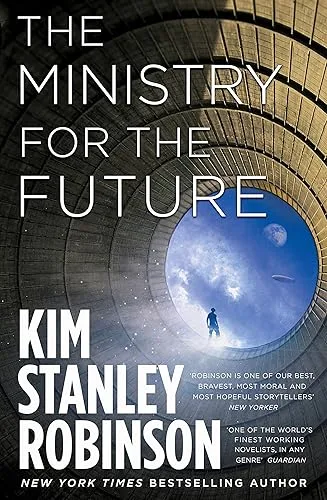
The narrative begins with a catastrophic heatwave in India that kills millions, prompting the creation of a Zurich-based UN body titled the Ministry for the Future. This agency, led by Mary Murphy, advocates for the legal rights of future generations. The plot details specific mechanisms for stabilizing the biosphere, such as the Carbon Coin—a blockchain-backed currency that rewards carbon sequestration—and the physical deployment of sub-glacial pumping to slow sea-level rise. Central characters, including a traumatized survivor named Frank May, intersect with the Ministry’s efforts to suppress eco-terrorism while implementing radical shifts in global banking and land use.
Practitioners of climate policy, ecological economists, and science fiction readers value this work for its technical specificity. It provides a blueprint for how existing international institutions might pivot toward survival through specific financial reforms and engineering projects. Readers finish the book with a literal inventory of potential strategies for decarbonization, ranging from regenerative agriculture to the taxation of capital flight. It offers a logistical framework for addressing the climate crisis rather than a standard disaster narrative.
Deep and outward-looking; a moderate read.
Best for readers like The Systems Thinker. Which reader are you?
- Published
- 2020
- Language
- EN