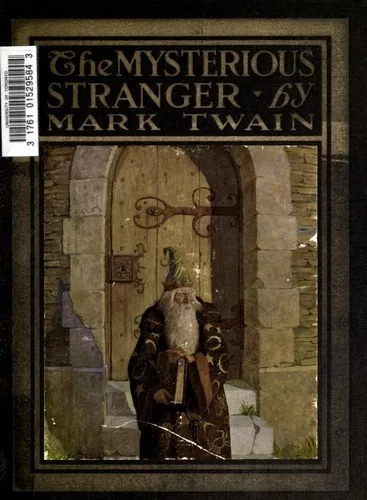
In 1590, in the remote Austrian village of Eseldorf, three young boys encounter a handsome teenager named Satan, who claims to be the nephew of the fallen angel. Unlike his uncle, this celestial being possesses no moral sense, viewing human suffering with the same indifference a person might feel toward an anthill. Through supernatural displays and a cynical wit, Satan manipulates the fabric of reality to reveal the absurdity of the "Moral Sense" and the cruelty ingrained in human history. He argues that humanity’s only effective weapon against its own biological and social misery is laughter, while orchestrating tragic outcomes to prove that death is often a kindness.
This narrative appeals to readers of dark fantasy and philosophical satire who enjoy questioning the validity of organized religion and social hierarchies. Those who study Mark Twain’s later, more pessimistic period read this to see how he deconstructs the concept of free will and the inherent value of human consciousness. A reader walks away with a stark perspective on the futility of human ambition and a realization that reality may be nothing more than a lonely dream populated by empty shadows.
- Published
- 1916
- Language
- EN
More by Mark Twain
See all →