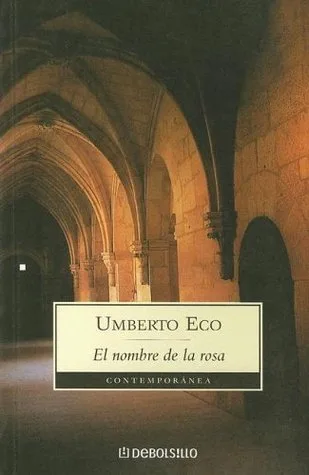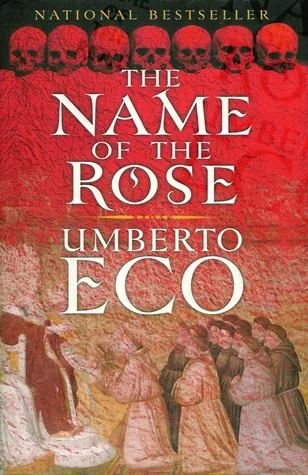
In 1327, Franciscan friar William of Baskerville and his young apprentice, Adso of Melk, arrive at a wealthy Benedictine monastery in the Italian mountains to attend a theological debate. Their visit is quickly derailed by a string of bizarre murders among the monks. William, a former inquisitor, utilizes Aristotelian logic and semiotics to decode the cryptic symbols left behind by the victims. His investigation centers on a labyrinthine library and a secret manuscript of Aristotle’s Poetics, which the abbey hierarchy seeks to suppress to preserve religious orthodoxy.
This novel serves readers who enjoy dense historical puzzles and the intersection of medieval theology with modern forensic reasoning. It appeals to those interested in the transition from medieval faith to Renaissance rationalism. The reader gains a granular understanding of fourteenth-century ecclesiastical politics, heresy, and the evolution of the detective genre. By the conclusion, the audience understands how the control of information and the suppression of laughter were used as tools of institutional power during the Inquisition.
Insights from The Name of the Rose
“I have never doubted the truth of signs, Adso. It is the only thing man has to learn how to use.”
William of Baskerville tries to solve murders using pure logic. He eventually finds that the world is too messy for perfect patterns.
“Laughter is the weakness, the corruption, the foolishness of our flesh.”
The monks are terrified of laughter. They think it kills fear, and without fear, they can't control anyone.
“How peaceful life would be without love. How safe. How tranquil. And how dull.”
Adso falls in love for a single night in a dark kitchen. He spends the rest of his life trying to find words for a feeling he can't name.
“The library was built on a plan which has remained obscure to all but the librarian.”
The library is a literal maze meant to keep people out. It shows how people in power treat knowledge like a dangerous weapon.
- Published
- 1980
- Publisher
- Houghton Mifflin Harcourt
- ISBN
- 9780156001311
- Language
- EN