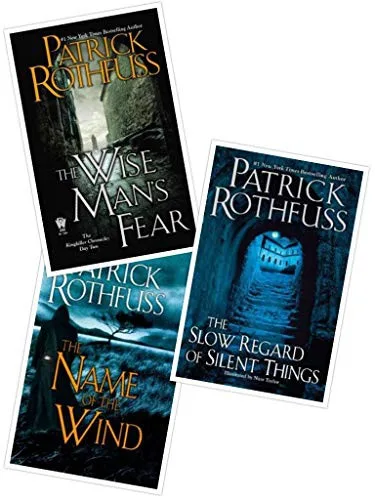
Kvothe lives as an unassuming innkeeper under an alias, hiding a history of notoriety and magic. When a chronicler discovers his location, Kvothe agrees to recount his life story over three days. He narrates his childhood in a troupe of traveling performers, his survival as an orphan in the city of Tarbean, and his eventual admission to the University. There, he studies sympathy—a rigorous system of energy manipulation—and searches for information regarding the Chandrian, the mysterious entities who murdered his family. His narrative focuses on his destitution, his rivalry with the wealthy Ambrose Jakis, and his pursuit of the literal name of the wind.
This novel serves readers who prefer high fantasy grounded in academic settings and strict magical laws. It attracts those interested in the mechanics of how a legend is constructed versus the reality of the person behind it. Readers finish the book with an understanding of sympathy’s scientific principles and the social hierarchies of a pre-industrial world. They gain a detailed perspective on how poverty and reputation shape a hero’s choices before they become myths.
Escapist; a moderate read.
Best for readers like The Escapist Adventurer. Which reader are you?
Insights from The Name of the Wind
“It was the patient, cut-flower sound of a man who is waiting to die.”
Waiting for a storm to break feels exactly like those quiet moments in the Waystone Inn. Kvothe hides his true self behind a simple apron and a tired smile.
Poverty in Tarbean isn't just about being hungry. It is the constant, crushing fear that you might simply vanish and nobody would notice.
“Begone, lizard! I have found better things than you to listen to!”
Words have a weight that most people ignore. Learning the true name of the wind requires a terrifying kind of listening.
“I have been called Shadicar, Lightfinger, and Six-String.”
Kvothe survives on cleverness and pure spite. Most heroes have destiny, but he just has a lute and a very sharp tongue.
- Published
- 2007
- Language
- EN