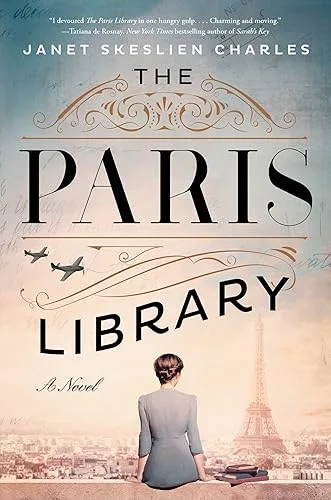
In 1939 Paris, Odile Souchet secures her dream job at the American Library in Paris, but her life fractures when the Nazis occupy the city. Alongside a dedicated staff, she risks imprisonment to hand-deliver books to Jewish subscribers who are barred from public spaces. The narrative shifts to 1983 Montana, following a teenager named Lily who seeks to understand her reclusive, elderly neighbor. As their friendship grows, Odile reveals her history, detailing how her wartime choices led to betrayal and her eventual departure from France.
Historical fiction enthusiasts read this book to understand the specific operations of the American Library in Paris during the German occupation. Readers interested in library science and bibliotherapy will see how literature functions as a source of community and survival during global conflict. The story provides a detailed look at the Resistance beyond the battlefield, focusing on the preservation of intellectual freedom. One exits the book with an understanding of how historical trauma shapes individual character across decades and how local institutions protected culture under totalitarian rule.
Insights from The Paris Library
“The library is a light in the darkness.”
Odile values her library card more than a passport. It represents her belonging to a world of stories that war cannot touch.
“Everyone has a story. Most are hidden.”
Lily learns that even the kindest neighbors have secrets. Older people carry entire lifetimes of grief we never see.
“Books are a bridge. They connect us to others.”
The librarians risked everything to deliver books to Jewish patrons. They knew that losing access to literature is a slow death for the soul.
“Words have weight. Once said, they cannot be taken back.”
Jealousy can ruin a friendship faster than any soldier. One small letter written in anger changed Odile's life forever.
- Published
- 2021
- Publisher
- Atria Books
- ISBN
- 9781982134198
- Language
- EN