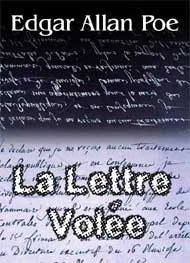
In Paris, a government minister steals a compromising letter from the royal apartments, using it to blackmail a high-ranking lady. Although the Prefect of Police knows the culprit and has searched his residence with exhaustive precision, the document remains missing. C. Auguste Dupin assists the baffled authorities by applying his theory of psychological induction. He realizes the minister has not hidden the letter in a secret compartment, but has instead disguised it in plain sight to exploit the police's reliance on rigid, mechanical search methods.
This story serves readers interested in the intellectual mechanics of the detective genre and the evolution of forensic logic. It appeals to those who enjoy puzzles centered on the difference between mathematical calculation and imaginative reasoning. The audience learns how a criminal’s perspective dictates their strategy and why obvious solutions are often overlooked by those focusing solely on complex data. The reader concludes the text with a clear understanding of the hidden-in-plain-sight trope and the concept of ratiocination.
- Published
- 1931
- Language
- EN