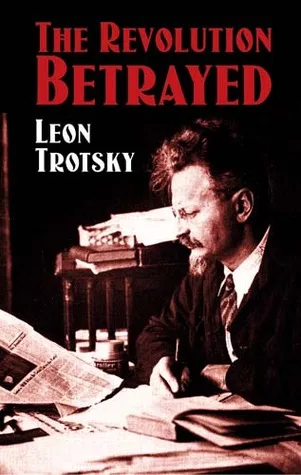
Leon Trotsky analyzes the Soviet Union’s shift from a proactive revolutionary workers' state to a conservative bureaucratic regime under Joseph Stalin. Writing from exile, he argues that the Russian Revolution did not produce a socialist society but a transitional formation that became stalled by the rise of a privileged administrative caste. Trotsky details how the bureaucracy seized control of the means of production to secure its own social position, resulting in the suppression of internal democracy and the reversal of progressive policies regarding labor, the family, and internationalism. He classifies the state as a degenerated workers' state, asserting that victory over capitalism requires a second, political revolution to oust the bureaucrats while maintaining nationalized property.
Students of Marxist theory and historians of the 20th century read this text to understand the internal mechanics behind the Soviet Union's authoritarian turn. It serves as a primary source for those examining the specific socio-economic conditions that allowed Stalinism to replace Leninist theory. Readers finish the book with a framework for distinguishing between social property relations and political administration, gaining a lens through which to analyze how revolutionary institutions can calcify into self-serving hierarchies.
- Published
- 1937
- Language
- EN
More by Leon Trotsky
See all →
Readers also enjoyed