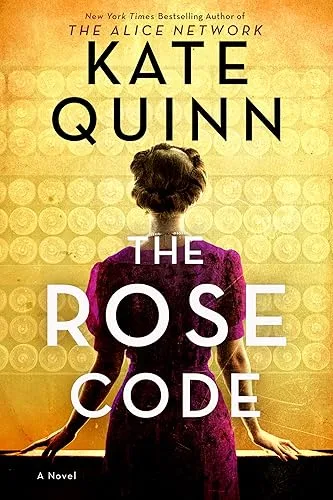
In 1940, three women from vastly different social circles converge at Bletchley Park to join the secret British codebreaking operation. Osla is an upper-class debutante, Mab is a working-class Londoner seeking upward mobility, and Beth is a shy, sheltered technician with a genius-level aptitude for logic. They work in high-pressure environments to crack the German Enigma cypher until a betrayal shatters their friendship. In 1947, on the eve of the royal wedding, the three must reunite to identify a traitor hidden within their former ranks by solving a final, personal puzzle sent from a psychiatric asylum.
Readers who enjoy historical narratives centered on female professional life and technical labor during World War II will find this book useful. It provides a detailed look at the internal mechanics of signal intelligence and the rigid gender hierarchies of the mid-twentieth century. Readers finish the book with a clear understanding of the mental toll inherent in wartime secrecy and the social challenges faced by women transitioning from high-stakes military roles back to stifling domestic expectations in the post-war era.
Insights from The Rose Code
“I was a debutante. I wasn’t a moron.”
Osla could have lived a shallow life of parties. Instead she used her fluency in German to hunt U-boats. It shows how much talent high society wasted back then.
“The traitor is one of us.”
The betrayal in the clock tower was devastating. Someone they trusted used their work against them. It turned their shared victory into a private nightmare.
Mental health treatment in the 1940s was terrifying. Sending Beth to an asylum for knowing too much was a cruel move. It shows how easily women were silenced back then.
“Friends are the family you choose.”
Watching the three women reunite at the royal wedding was bittersweet. They were so different from the girls who started in 1940. War changed their bones.
- Published
- 2021
- Publisher
- William Morrow
- ISBN
- 9780062943477
- Language
- EN