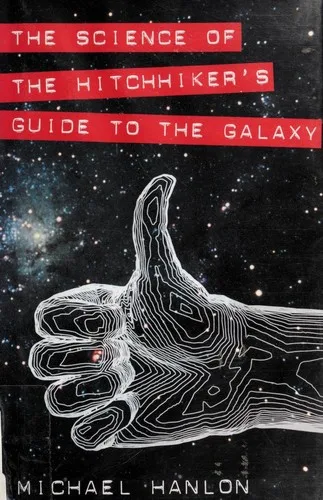
Michael Hanlon examines the physics and biology behind Douglas Adams’s space comedy, comparing fictional inventions to real laboratory research. He investigates the plausibility of the Infinite Improbability Drive by discussing quantum tunneling and the strange behavior of subatomic particles. The text analyzes how a Babel fish might function through real-time brain-wave translation and evaluates the likelihood of extraterrestrial life based on the Drake Equation. Hanlon also addresses the engineering hurdles of planetary construction and the theoretical possibility of teleporting matter through space-time shortcuts.
This book is intended for enthusiasts of science fiction who want to understand the boundary between satirical imagination and actual scientific feasibility. It appeals to readers curious about astrophysics, evolution, and emerging technologies. After reading, a person understands the mechanics of entropy, the scale of the universe, and the various ways contemporary science might eventually replicate the seemingly impossible gadgets found in Arthur Dent’s travels across the galaxy.
Outward-looking; a moderate read.
Best for readers like The Evidence Seeker. Which reader are you?
- Published
- 2005
- Language
- EN

