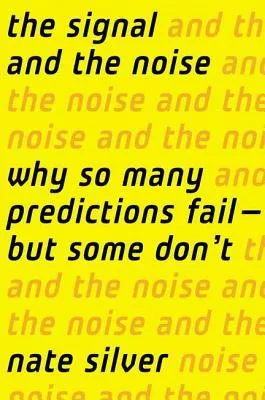
The Signal and the Noise: Why So Many Predictions Fail—But Some Don't
Nate Silver examines why human forecasts often fail by distinguishing between the "signal," which represents meaningful patterns, and "noise," which is random data that obscures truth. He analyzes predictive failures in fields like earthquake modeling, economic forecasting, and political polling, arguing that overconfidence and cognitive biases lead to poor results. Silver advocates for a Bayesian approach to probability, where practitioners update their beliefs as new information arrives rather than clinging to fixed certainties. Through case studies on professional poker players, weather forecasters, and baseball scouts, he demonstrates how successful predictors quantify uncertainty instead of ignoring it.
This book serves data scientists, business strategists, and general readers who want to improve their decision-making in uncertain environments. People read it to understand the mathematical underpinnings of probability and to learn why big data does not automatically lead to better accuracy. The reader walks away with a framework for identifying systematic errors in their own judgment and a set of tools for calculating risk more realistically in their professional and personal lives.
- Published
- 2012
- Language
- EN
More by Nate Silver
See all →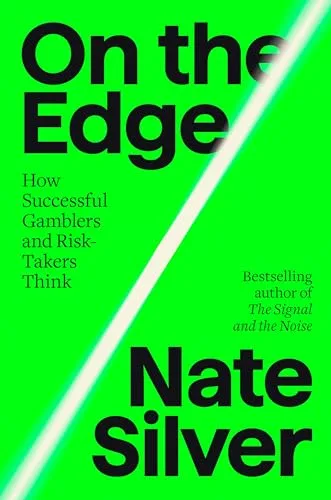

Readers also enjoyed